Winter Tires or All-Season Tires? Here’s the Real Difference

When selecting the best tires for your vehicle, it is essential to understand the difference between winter and all-season tires. Your selection can have a great impact on the safety, performance, and comfort particularly in cases of a drop in temperature or a change in weather conditions. Most drivers tend to believe that tires work the same throughout the year, and that was not the case.
Below, we are going to deconstruct the main differences between winter and all-season tires and leave you with a clear understanding of which one may be the most suitable to your driving requirements.
1. Winter Tires
Winter tires are tires which are designed to be used in cold weather such as snow, ice, and slush. They are fabricated using a softer rubber that does not harden even on ice so that they have traction and are easy to control. Winter tires have deeper tread patterns, and they have many sipes (small cuts) to enhance grip on icy roads.
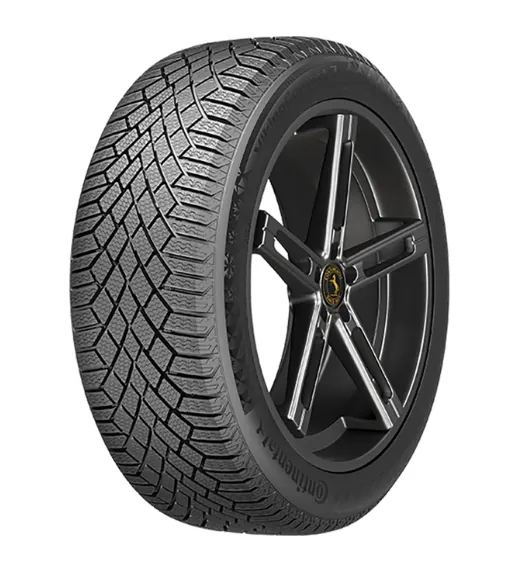
This Continental WinterContact SI is a high-quality winter tire designed to offer better handling in low temperatures. It has a high tread design that ensures it performs well on snow and ice. I like the fact that it is stable on winter roads and that one is always sure there is a stop at the right time, especially during slippery turns. Winter tires are needed to keep you safe and perform better in the areas where the temperatures often drop below 45 o F (7 C).
Winter tires are best suited to people who have to face snowy roads or patches of ice. They are also suggested to be used in long winter journeys where they need constant traction. In warmer seasons, however, they wear out quicker with the softer rubber compound, and therefore are only serviceable seasonally.
2. All-Season Tires
All-season tires are tires as the name implies that are suitable during the year in cool climates. They are hybrid tires which provide the properties of both summer and winter tires to manage the diverse road conditions such as dry and wet roads and a small amount of light snow.
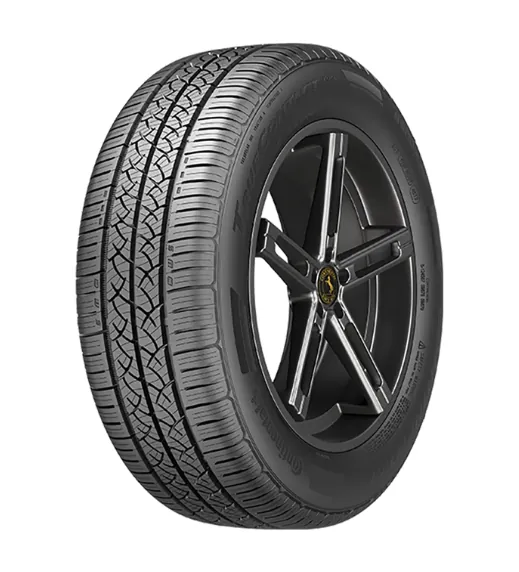
This Continental TrueContact Tour is a famous all-season tire that performs well in various weather conditions. Its tread system maximizes handling and fuel economy and life. Personally, I consider them useful in daily driving because I do not need to change tires every season. Nonetheless, they do not provide the same levels of traction or braking force as special winter tires do on snowy or icy roads, even though they do a sufficient job in light winter conditions.
All-season tires are the most suitable to use in areas where winters are not extreme or to those who prefer convenience and longer life of tires. They are intended to deal with the light snowfall but do not replace winter tires when the temperature is extremely cold or there is a lot of snow.
Key Differences Between Winter Tires and All-Season Tires
|
|
|
|
|
|
|
|
|
|
|
|
|
|
|
|
|
|
|
|
|
|
|
|
|
|
|
|
Which One Should You Choose?
Whether to use winter tires or all-season tires greatly depends on weather conditions and driving conditions. Around the globe where there is a lot of snow, ice or cold weather, winter tires such as the Continental WinterContact SI can be invested in to guarantee great safety and performance. Conversely, when your winters are not that cold and you need some convenience and longer life cycle and do not want to change tires in seasons, all-season tires such as Continental TrueContact Tour are the ones that can provide you with the same reliable year-round performance.
Final Thoughts
Making the correct choice of tires for your car is not only picking a brand but ensuring your tires match your climatic conditions, whether it is winter when you want to drive in icy, snowy, and cold climates of your vehicle, or you are in a moderate climate where all-season tires are suitable. By knowing these differences, you will be safe, comfortable and confident on the road regardless of the season.